
Bringing together three aspects of the laboratory workstation
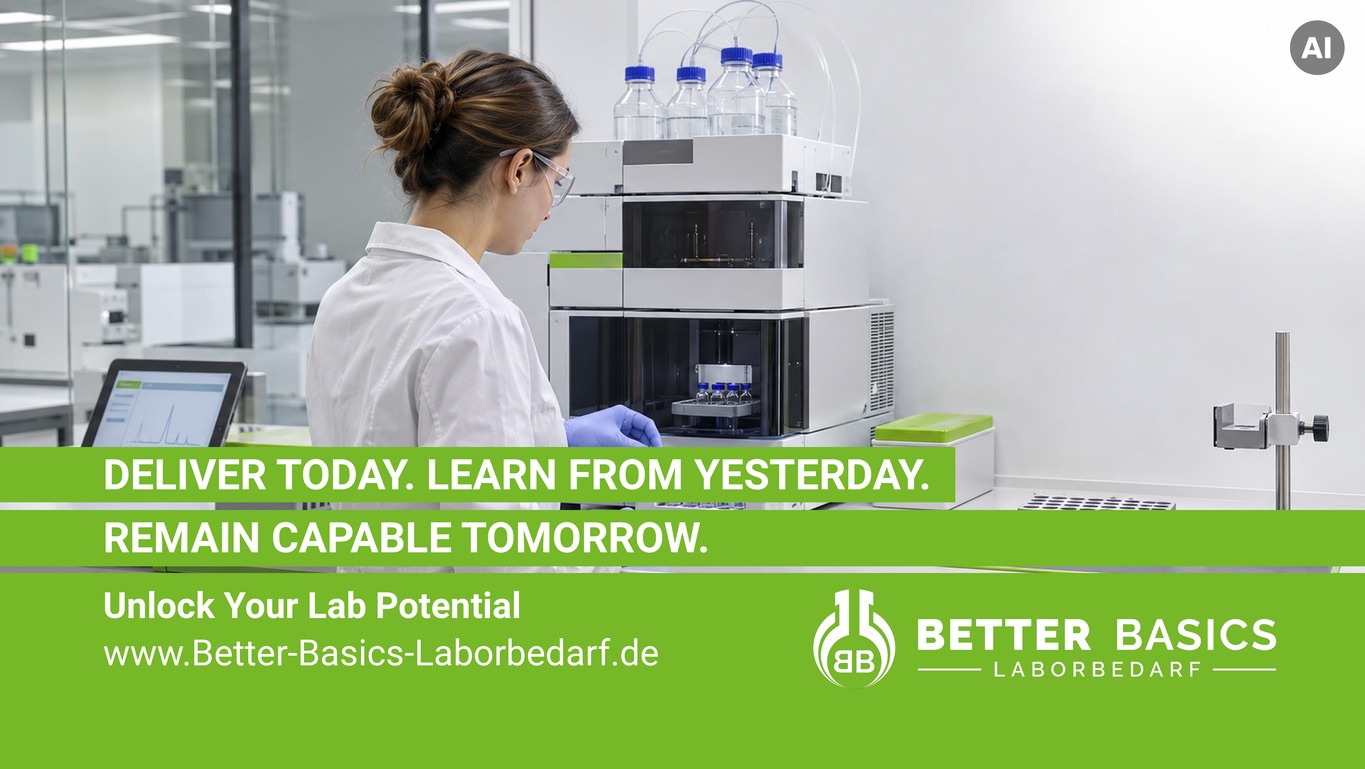
An analytical laboratory has to deliver reliable results every day. At the same time, it should learn from deviations, bottlenecks and unnecessary handling – and retain enough room to deal safely with future changes in methods, sample volumes or regulatory requirements. These three tasks compete for the same space, equipment and attention.
The white paper “Lean Labor – Die Architektur guter Arbeit” describes this tension as follows (editorial translation from German): “Every organisation, like a person, lives in three times at once. It must deliver today, learn from yesterday and remain capable of acting tomorrow.”
The balance becomes visible at the laboratory workplace. If every surface is permanently occupied by current work, there is no room for structured review or prepared change. If improvements are designed without reference to routine work, however, they can create additional standards that do not support the actual process. The physical organisation therefore needs to connect operation, learning and renewal.
One possible example from HPLC analysis: the active vial rack identifies the currently approved sequence. A clearly separated position holds completed material until the documented review is finished. A third, initially free and reconfigurable area is prepared for the next method run or a limited trial. Identity, status, storage conditions, contamination control and permissible hold times must remain traceable throughout.
Standardised positions and modular holders can support this separation. They make deviations easier to see and allow individual elements to be adapted without rearranging the entire workplace. The appropriate zones nevertheless depend on the process, risk controls and applicable operating procedures; the image is an organisational prompt, not a procedure.
A few local questions can test whether the balance works: can today’s sequence be supplied without extra searching or rearrangement? Are lessons from deviations translated into positions, standards or interfaces? Is space and capacity retained for an upcoming method run? Counter-metrics such as errors, waiting time, ergonomic strain and additional documentation effort belong in the assessment.
Choose one recurring laboratory process and mark what has to deliver today, where learning visibly feeds back into the standard and which capacity remains protected for tomorrow. In this way, future readiness becomes a testable part of daily work rather than an additional project.