
Good systems protect attention
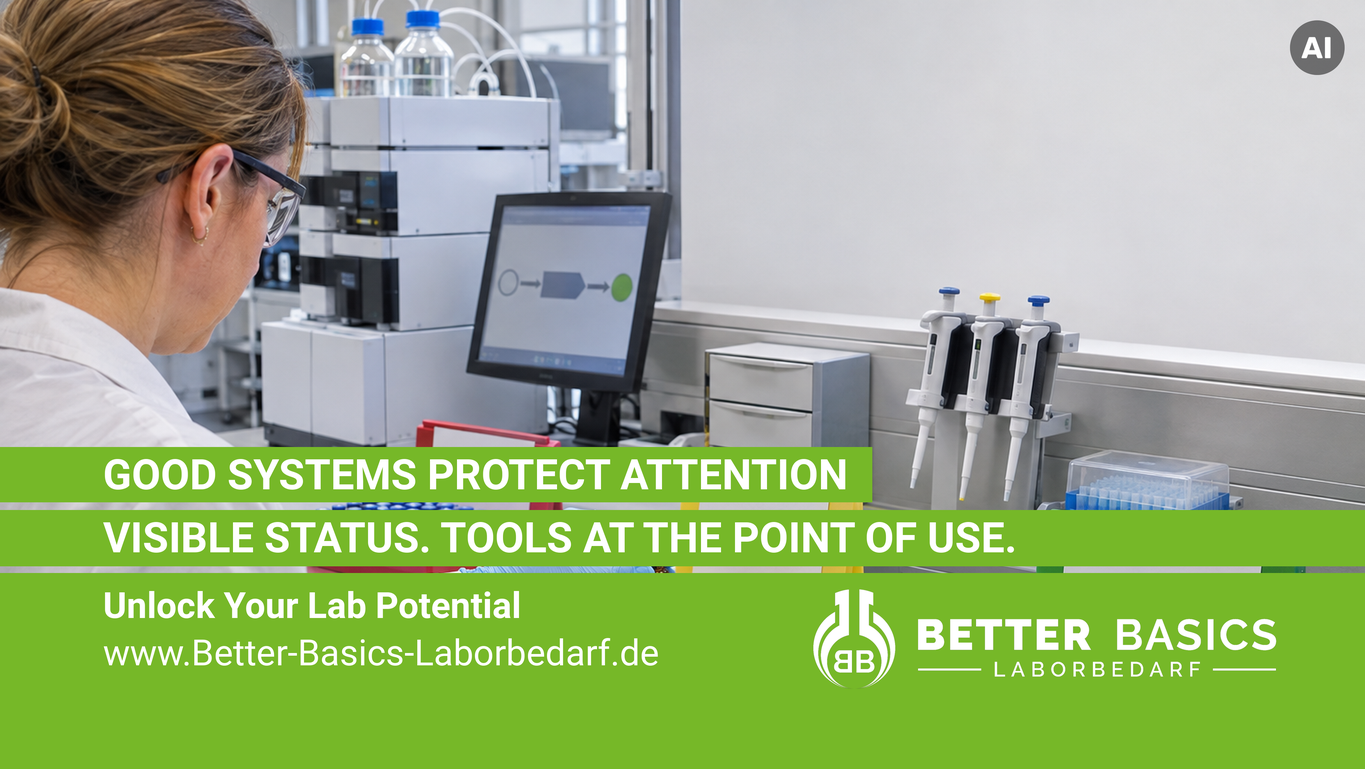
In many laboratory processes, experience holds the workflow together. People remind others about missing materials, remember exceptions, clarify ambiguous states and double-check handovers as a precaution. This attention is valuable. If it is permanently required to close organisational gaps, however, the process consumes the very capability needed for technically critical observations.
The white paper “Lean Labor – Die Architektur guter Arbeit” puts it this way (editorial translation from German): “A system is not sustainably effective when people have to compensate permanently for its shortcomings through attention, memory and exhaustion.”
Professional attention remains indispensable in the laboratory. It should be directed towards samples, results, deviations and decisions – not towards repeatedly searching for tools, remembering changing storage locations or reconstructing an unclear processing status.
During HPLC sample preparation, the workstation can make the workflow visible: samples that have not been started, samples currently in process and completed samples remain physically distinct. Frequently used tools have fixed positions at the point of use. Status, responsibility and the next step are recorded in the approved documentation system and reflected clearly at the workstation. Physical organisation supports the procedure; it does not replace it.
In this context, 5S means more than tidying up. Defined locations can reduce searching and remembering; visible deviations may be noticed earlier. Standardisation must not make people blind to exceptions: special cases, hygiene requirements, stability limits and justified process changes still require clear rules and professional judgement.
Whether the design genuinely reduces avoidable mental load should be assessed locally. Useful signals may include searches, queries, interruptions, retrospective status checks, informal memory aids and recurring workarounds. At the same time, quality, safe working, flexibility and the requirements of the documented procedure must be maintained.
Review one recurring task: which information does one person currently have to keep in mind – and how could the process or workstation carry that information reliably?