
Good laboratory work begins before the start
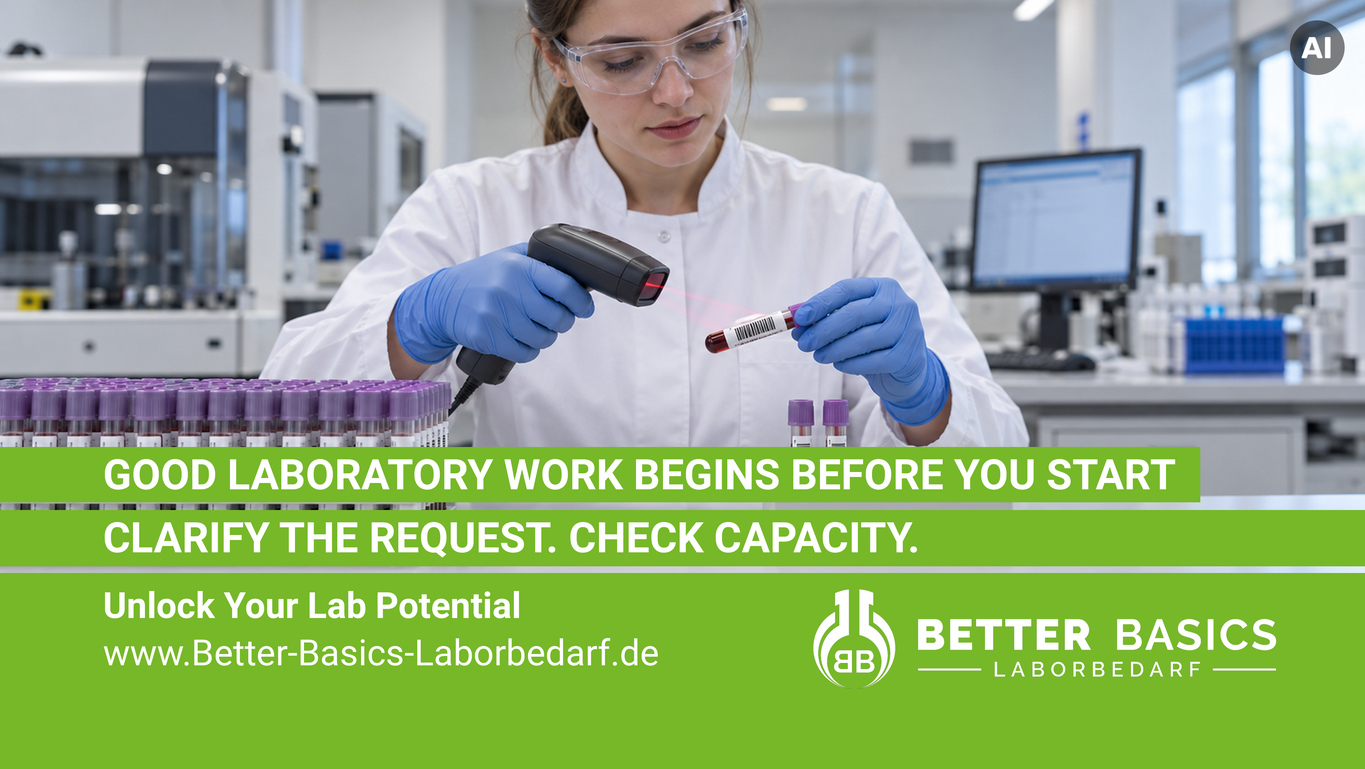
In a laboratory, a full bench is not in itself a sign of good workflow. If every incoming sample is put into processing immediately, multiple tasks may be started in parallel, queries may arise and waiting times may develop. The key question therefore comes before the first processing step: what should start now – and what needs to wait?
The white paper “Lean Labor – Die Architektur guter Arbeit” puts it this way (editorial translation from German): “Good organisation does not begin with faster work. It begins with deciding which work should start at all.”
For a recurring sample preparation process, this means clarifying the request and sample identity, checking the required information and planning the people, equipment and materials needed before starting. Capacity for subsequent steps and review also belongs in that decision. Urgency alone does not replace these checks.
One possible practical example: at sample intake, samples not yet authorised for processing remain distinguishable from those currently being processed. A designated person decides which task starts next, using agreed criteria. Identity, status, responsibility and the next step remain traceable. Requirements for storage, stability and permissible waiting times continue to apply.
5S can support this decision at the workplace: defined locations and visible status information make the agreed separation apparent. Priorities and the required capacity still need to be established organisationally.
Whether such a rule helps can be assessed locally: how much work has been started at the same time? How long do samples wait between steps? Are stability limits, urgent needs or downstream checks adversely affected? A suitable start rule depends on the specific process – there is no universally applicable maximum number.
Review one recurring process: who currently decides which work may start – and is that decision visible at the workplace?